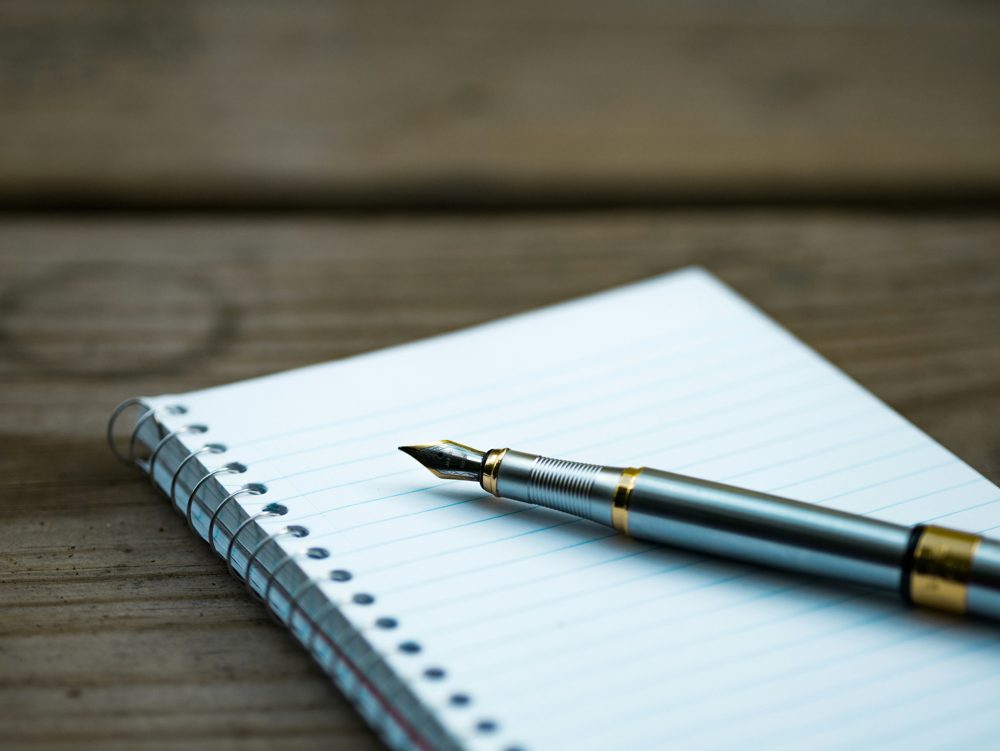
The wrong pen can make a lovely notebook frustrating. Ink bleeding through paper, smudging and skipping are the usual complaints. Here is a quick guide to the three main pen types.
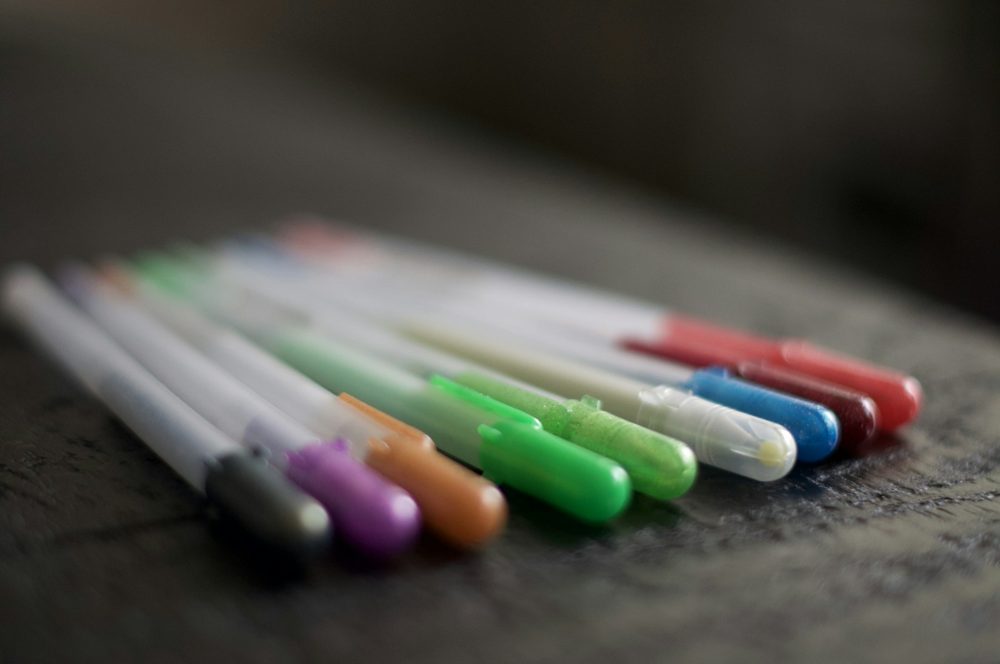
Gel pens
Smooth, vivid colour and very comfortable for longer writing. Some gel inks can smudge on certain papers while wet, and may show through thin pages.
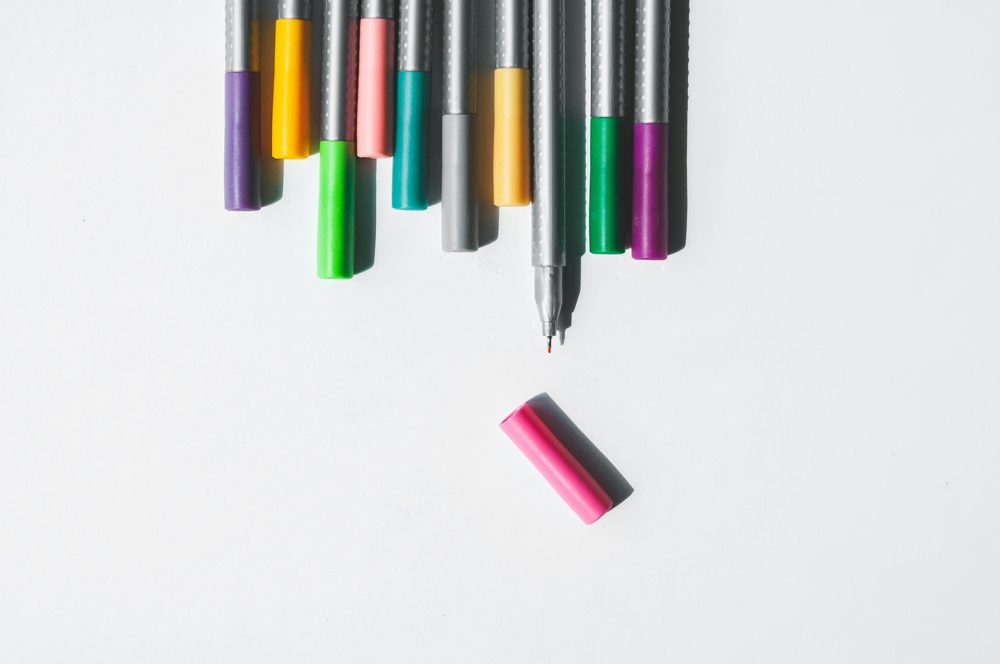
Fineliners
Felt-tip pens with a fine point, popular for planning and lists. They give crisp lines but can bleed on thin paper. Check whether the ink is water-based or pigment.
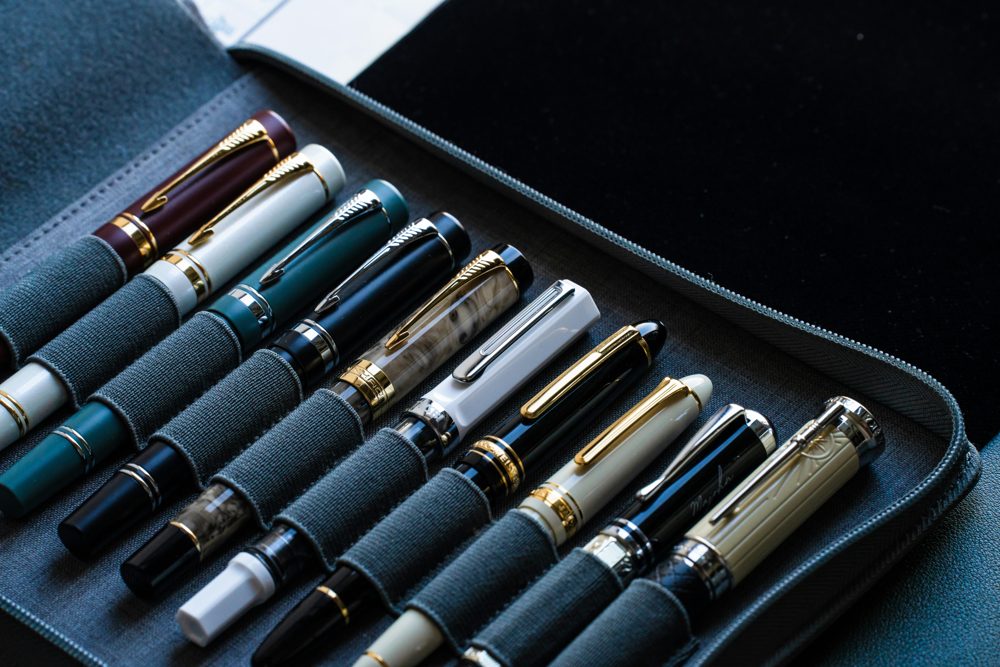
Fountain pens
Very smooth and refillable, with more ink options. They need more care, and suit thicker paper. Beginner-friendly ones use cartridges so there is no messy filling.
How to avoid bleed-through
- Choose a notebook with about 100 gsm or heavier paper.
- Pick a finer tip, which lays down less ink.
- Test on the back page before committing to a whole notebook.
Match the pen to the notebook
The paper decides how a pen behaves. Smooth, coated paper can make gel ink smudge, while thin paper shows through fineliners. Dotted or lined notebooks with thicker paper give you the widest choice. If you already own a notebook, test your pens on the last page first.
Tip sizes and line widths
- 0.3 to 0.4 mm: fine, neat lines, good for small handwriting and planners.
- 0.5 to 0.7 mm: a comfortable everyday width.
- Above 0.7 mm: bold lines, better for lettering and headings.
Practical comfort
Check the grip and weight, especially if you write for a long time. A pen that feels fine for a line may tire your hand after a page.
Building a small set
Start with one pen you love for daily writing, and add a few colours for headings or highlights. Check whether refills are available, since refillable pens cost less over time.